
As heating costs remain a key consideration for homeowners across Lichfield, Staffordshire, and the wider West Midlands, ensuring your home retains warmth has never been more important. Windows account for up to 18% of residential heat loss when older, inefficient glazing starts to fail. But how do you know when simple repairs are no longer enough, and whether upgrading to modern A-rated uPVC windows is truly worth the investment?
In this comprehensive question-and-answer guide, our glazing specialists answer the most frequent questions homeowners ask about energy-efficient window replacement, thermal ratings, draught prevention, and acoustic comfort.
Quick Takeaway for Homeowners
Replacing dated first-generation double glazing with modern A-rated multi-chambered uPVC casement windows can cut window heat loss by over 50%, virtually eliminate interior draughts, and reduce household heating bills by up to £180 to £220 annually in a typical detached home.
Q1: How do I know if my existing double glazing needs replacing?
Many homeowners assume windows last indefinitely, but older double glazing units installed in the 1990s or early 2000s often reach the end of their operational lifespan after 15 to 20 years. Key indicators that your windows need replacing include:
- Persistent internal condensation between panes: If moisture or misting appears inside the sealed unit, the perimeter hermetic seal has failed, allowing insulating gas to escape and moisture to enter.
- Draughts around frames and sashes: Perished rubber gaskets, warped outer uPVC profiles, or failed friction stays create cold air pathways into your living spaces.
- Cold zones near the glass: If standing next to a closed window feels noticeably colder than the rest of the room, your glazing lacks modern low-emissivity (Low-E) coatings and argon gas filling.
- Stiff or failing mechanisms: Handles that jam, sashes that drop, or multipoint locks that no longer engage smoothly compromise both thermal performance and home security.
- Escalating energy bills: An unexplained rise in heating requirements to maintain ambient room temperature often points directly to excessive aperture heat loss.
Q2: What exactly does an ‘A-Rated’ uPVC window mean?
Window energy ratings in the UK are certified by independent bodies such as the British Fenestration Rating Council (BFRC). Similar to the energy efficiency labels found on household appliances, windows are graded on a rainbow scale from G (worst) up to A++ (highest thermal performance).
An A-rated uPVC window achieves an optimal energy balance by measuring three critical performance factors:
- The Overall U-Value (Thermal Transmittance): Measures how easily heat transfers through the entire window (frame and glass combined). Modern A-rated units typically achieve U-values between 1.2 and 1.4 W/m²K, comfortably exceeding current UK Building Regulations (Part L standard of 1.4 W/m²K).
- Solar Heat Gain (G-Value): Measures the percentage of natural free heat from sunlight that passes through the pane to help warm your home naturally during spring, autumn, and winter.
- Air Leakage (L-Value): Evaluates the airtightness of the seals and welded profile seams to ensure zero wind infiltration around the opening sashes.
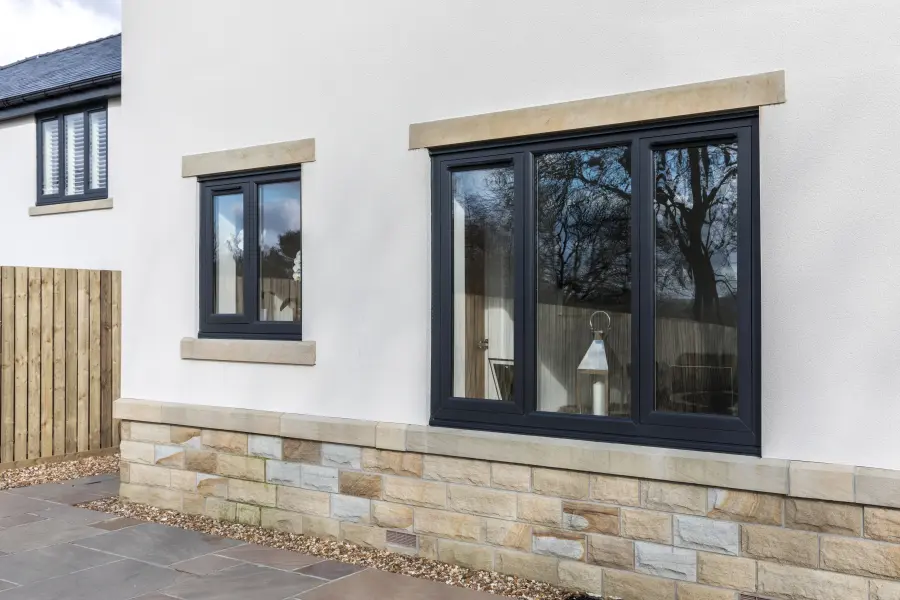
Modern A-rated flush sash uPVC windows combine authentic heritage aesthetics with multi-chambered thermal insulation.
Q3: How much heat and money can modern uPVC windows actually save?
According to data from the Energy Saving Trust, upgrading an entire house from dated single glazing or early un-coated double glazing to certified A-rated double glazed uPVC windows delivers measurable household savings:
| Property Type | Typical Annual Heating Saving | Annual CO2 Reduction |
|---|---|---|
| Detached House | £180 – £220 / year | Up to 410 kg |
| Semi-Detached House | £135 – £165 / year | Up to 310 kg |
| Mid-Terrace House | £105 – £130 / year | Up to 240 kg |
| Detached Bungalow | £120 – £150 / year | Up to 280 kg |
Beyond immediate heating bill savings, upgraded windows also improve your property’s Energy Performance Certificate (EPC) rating — a critical factor that directly boosts buyer appeal and property resale valuation across Staffordshire and the West Midlands.
Q4: What makes today’s uPVC profiles so much warmer than older versions?
If you have 1990s uPVC frames, you may remember hollow plastic chambers that felt cold to the touch and developed exterior discolouration. Modern engineered uPVC profiles represent a complete generational transformation:
- Multi-Chambered Internal Profiles: Rather than a single hollow void, contemporary profiles feature 5 or 6 separate internal air chambers that trap stagnant air, breaking thermal bridging between inside and outside walls.
- Warm Edge Spacer Bars: Older aluminium spacers acted as direct conductors of cold around the edge of the glass. Today’s composite polymer warm-edge spacers insulate the glass perimeter, stopping cold perimeter bridging and reducing seal condensation by up to 80%.
- Argon Gas Filling: The 16mm or 20mm gap between your dual panes is filled with inert argon gas, which has 34% lower thermal conductivity than ordinary air.
- Low-E Soft-Coat Glass: Microscopically thin metallic oxide coatings on the inner pane reflect ambient room heat back into your living areas while allowing clear solar light to filter inward.
Q5: Can energy-efficient windows also reduce outside noise?
Yes, significantly. Acoustic insulation goes hand-in-hand with thermal efficiency. Inefficient single or early double glazing allows sound waves from traffic, neighbours, and overhead aircraft to pass freely into your home.
Modern uPVC casement and flush sash windows feature tight dual compression weather-seals and precision multi-point locking cams that pull the opening sash firmly against the outer frame. When combined with modern acoustic laminated glass or asymmetric pane thicknesses (e.g. 6mm exterior pane and 4mm interior pane), sound vibrations are broken, reducing incoming noise by up to 35 to 40 decibels (dB).
Q6: Do I need building regulations approval when replacing windows in the Midlands?
Yes. Under UK Building Regulations, all replacement external windows and glazed doors must comply with strict safety and thermal performance standards (specifically Approved Document L for conservation of fuel and power, and Approved Document F for adequate background ventilation).
When you choose a registered installer like Glazerite uPVC, you do not need to make a costly and slow application to your local council’s building control department. As an accredited installer, we self-certify the installation upon completion, issuing you with a full Building Regulations Compliance Certificate and guarantee that protects your home and keeps your legal paperwork in order for future property sales.
Q7: What colour and style options are available in modern uPVC?
White uPVC remains a timeless and budget-conscious favourite, but today’s homeowners are no longer limited to basic white. High-durability textured woodgrain foils now offer the authentic appearance of painted timber without the endless sanding, varnishing, and painting maintenance:
- Architectural Contemporary Tones: Anthracite Grey (RAL 7016), Slate Grey, and Jet Black for a sleek, contemporary aluminium aesthetic.
- Heritage & Cottage Colours: Chartwell Green, Agate Grey, Cream, and Pebble Grey to enhance traditional village and suburban character.
- Authentic Woodgrains: English Oak, Irish Oak, and Rosewood with realistic embossed grain textures.
- Dual Colour Options: Choose an expressive colour foil for your home’s exterior kerb appeal, paired with crisp, light-reflecting white on the interior frames to complement indoor decor.
Ready to Upgrade to Warmer, Quieter A-Rated Windows?
Speak with the local specialists at Glazerite uPVC. We provide expert advice, no-obligation home surveys, and bespoke A-rated window solutions tailored to properties across Lichfield, Staffordshire, and the West Midlands.